
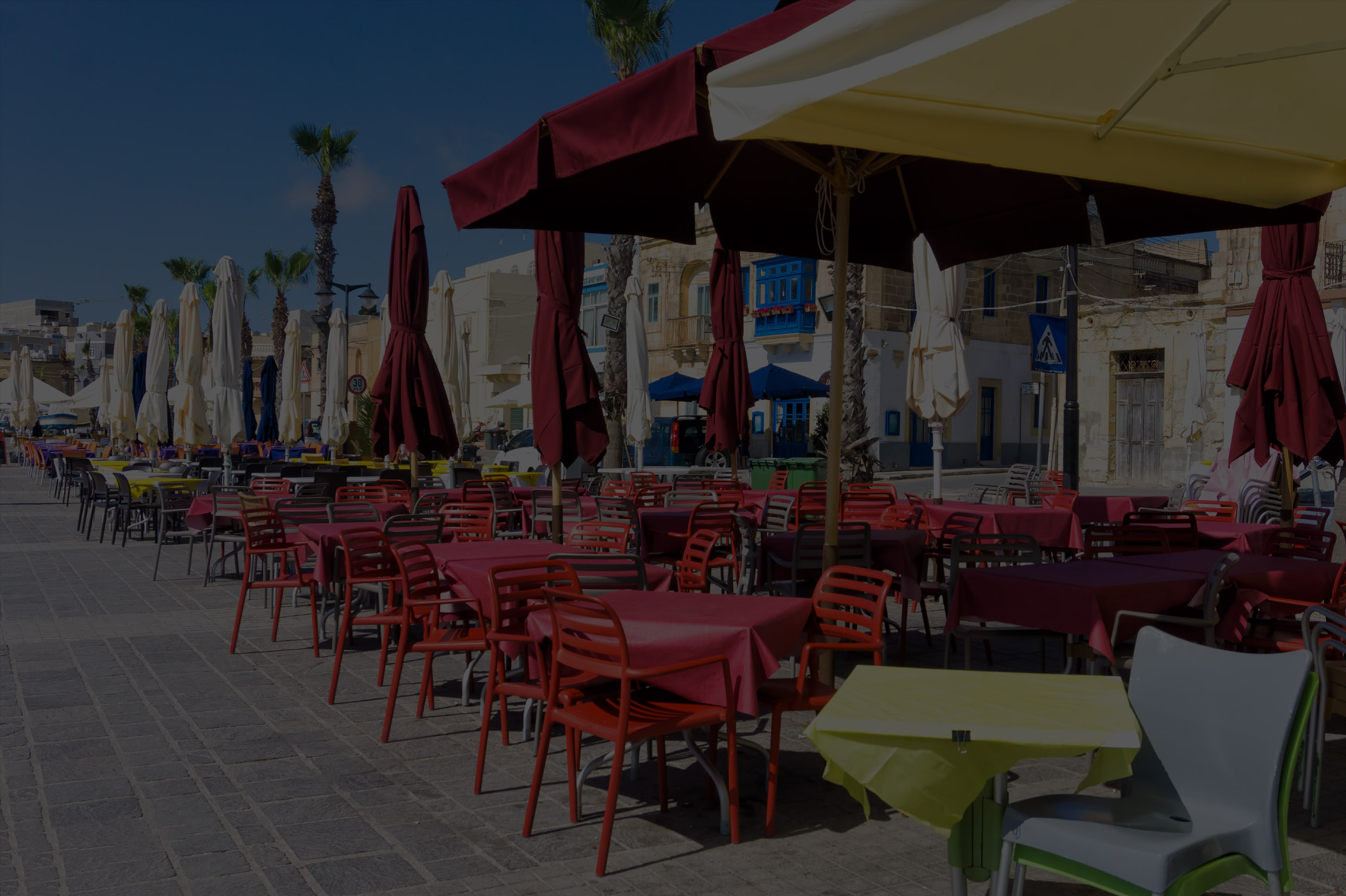
Al Fresco Dining: A Vital Part of Malta’s Catering Sector

Coffee to Experience
October 14, 2026
Quality Tourism: The Next Phase of Malta’s Success
October 17, 2026The article in HORECA 24, 'The Beauty of Dining Al Fresco. And the Pitfalls?', and the article in this edition, 'Al Fresco Dining Is Here to Stay', rightly highlight how outdoor dining has evolved and how closely it is now associated with the experience of visiting Malta — from Valletta and our historic towns to our seaside communities and villages.
ACE agrees: al fresco dining is here to stay. But if it is to remain sustainable, it needs a clear, consistent and practical regulatory framework
Outdoor dining is not simply about putting tables and chairs outside
For catering establishments, outdoor seating is central to the business model. It allows better use of available space, improves the customer experience, and adds significantly to the vibrancy of our towns and tourism areas.
It also generates employment and economic activity well beyond the individual establishment, supporting suppliers, employees, landlords and countless other businesses across the wider tourism ecosystem. This growth should not be seen simply as a matter of permitting tables and chairs in public spaces. It is part of a much wider conversation about how Malta wants its tourism destinations to function, and what kind of visitor experience we want to offer.
We need regulation – but it must be proportionate and workable
ACE fully recognises that public spaces must be managed responsibly, with proper consideration of pedestrian access, accessibility, traffic and parking, emergency access, neighbouring residents, environmental impact, cleanliness, noise, and the visual quality of our streets.
The industry is not asking for an absence of regulation. What it needs is certainty, consistency and proportionality: a business should understand clearly what is permitted, which authority is responsible, what conditions apply, and what process to follow.
As the original article demonstrates, outdoor seating currently falls under different authorities with different responsibilities. This creates uncertainty for operators genuinely trying to comply but forced to navigate a fragmented administrative environment. Greater coordination between the relevant authorities would benefit everyone — businesses, residents, communities, tourists and the authorities themselves.
Quality, not simply quantity
One important question raised in the article is whether Malta should pursue more outdoor dining, or better outdoor dining. ACE believes this should not be an either/ or discussion.
We should aim for quality. However, quality cannot be achieved through restrictions so unnecessary that they make outdoor operations commercially unviable. A well-regulated outdoor dining area can enhance a town or village and contribute to the character travellers increasingly seek out. On the other hand, poorly managed areas can create real problems. The answer lies in good planning and effective enforcement, not in treating outdoor dining itself as the problem.
Malta must remain competitive
Malta operates in an increasingly competitive international tourism market, where outdoor dining, cafés and street life are central to how visitors experience a destination. Our own success in creating vibrant destinations should not lead us to place unnecessary obstacles in the way of the businesses that help create that experience.
The catering sector has invested heavily in improving its establishments, creating attractive outdoor environments and responding to changing consumer expectations. Those investments require stability and confidence. Businesses cannot plan, invest, and employ people effectively when the regulatory environment is uncertain or inconsistently applied.
Public space must benefit the public
ACE recognises that public land belongs to the wider community and must be managed accordingly. The objective should be to balance commercial activity with the public interest.
Outdoor seating should not obstruct pavements or restrict public use of space. It should respect residents and neighbouring businesses, be properly maintained, and be adjusted or removed where genuine public needs require it. But equally, where an establishment operates legally, complies with requirements, and contributes positively to its area, its economic and social value should be clearly recognised.
A call for a unified approach ACE believes it is time for all stakeholders to move beyond a fragmented discussion and work towards a long-term national framework for outdoor catering — one that provides clear and transparent criteria; consistency between localities and authorities; a streamlined, coordinated permitting process; reasonable and proportionate conditions; proper consideration of accessibility; clear rules on maintenance, cleanliness and noise; effective enforcement; and long-term certainty for businesses investing in their premises and in Malta's tourism product.
The goal should not be to choose between residents and businesses, or between public space and commercial activity, but to create an environment where both can coexist successfully.
Al fresco dining is part of Malta's future
The hospitality sector has repeatedly shown it can adapt to changing circumstances, and outdoor dining is now firmly embedded in Malta's tourism and catering experience. ACE agrees with the article's central message: al fresco dining is here to stay. The challenge now is to ensure the regulatory framework evolves with it.
The more constructive question, then, is not whether Malta should have outdoor dining, but how we manage it properly, fairly and sustainably, so it continues to benefit our businesses, our communities and our visitors. ACE stands ready to take part in that discussion with Government, the relevant authorities, local councils, residents and other stakeholders.
Our objective is simple: a vibrant, well-managed and competitive Malta, where catering establishments can operate responsibly while enhancing the quality of life and tourism experience of our towns.
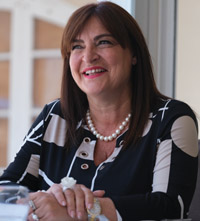
Michelle Muscat is currently the President of the Association of Catering Establishments (ACE). An accountant by profession, Ms Muscat previously served as Executive Officer at the Office of the Prime Minister, Personal Assistant to the Managing Director at Salvo Grima Group and Assistant Financial Controller at the Arrigo Group of Hotels Ltd. Within the HORECA industry, she is perhaps best known for her role as owner and manager of Restaurante La Vela located in Pieta
ACE (Association of Catering Establishments) represents a wide spectrum of entrepreneurs ploughing their trade in either of the following commercial outlets: snack bars, cafes, kiosks, casual diners, catering operations located within clubs, fast food take-away, food delivery outlets and fine dining restaurants.
For more information visit https://www.ace-malta.com
Click here to see Horeca Issue 25 online