

From Ambition to Practical Results

Sixteen Hospitality Solutions: The Tech Partner at the Heart of the Restaurant
November 19, 2026As the Malta Tourism Authority explores where AI can deliver real operational value, Director of Information Technology Andrew Cassar explains why the focus is on solving practical problems, supporting staff and keeping human judgement in control.
Artificial intelligence may be dominating technology conversations, but at the Malta Tourism Authority the starting point is considerably more practical: identifying where the technology can provide genuine operational value.
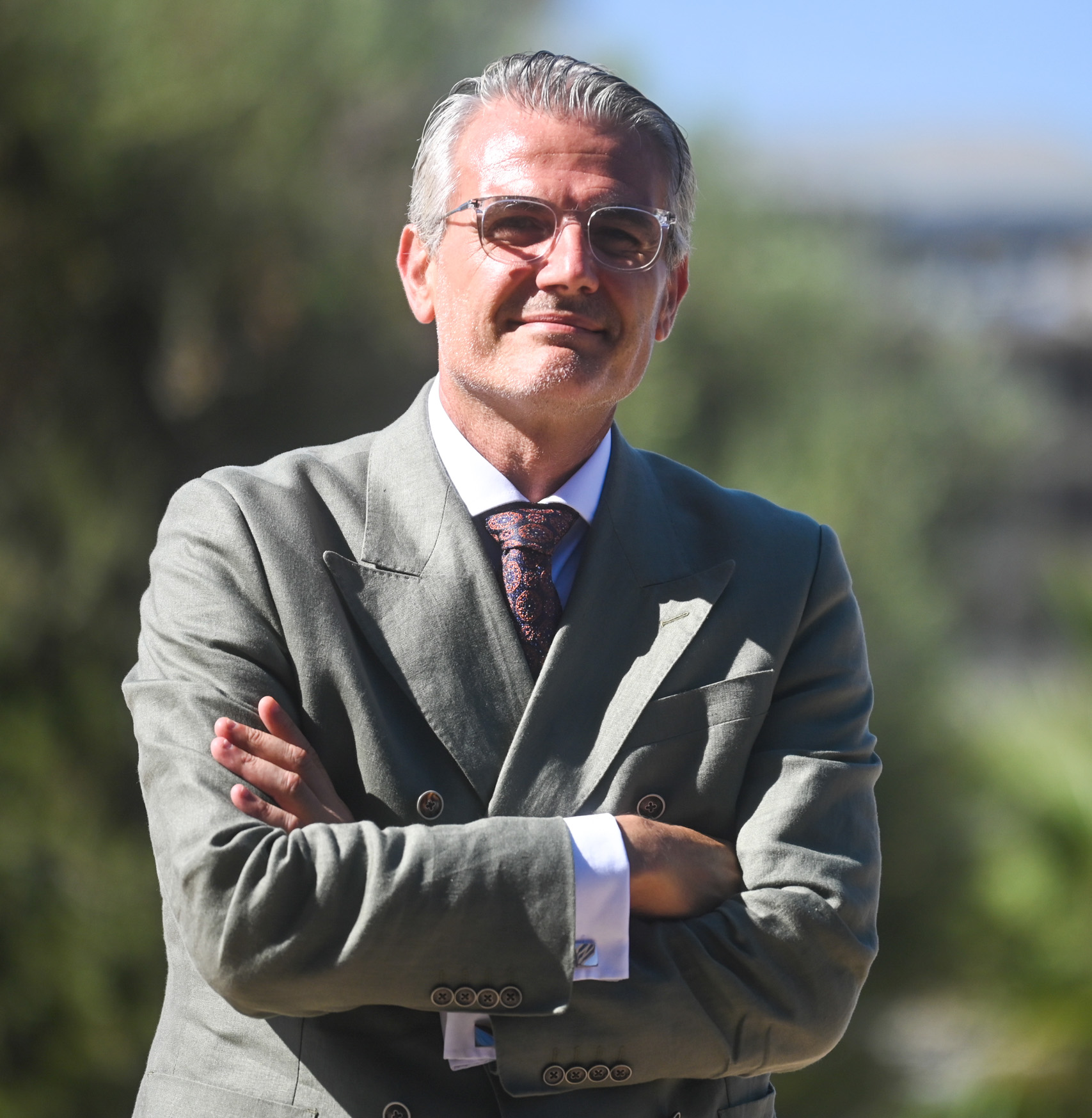
For Andrew Cassar, Director of Information Technology at the Malta Tourism Authority, one point needs to be clear from the outset.
“The first thing I'd say is that our formal AI Strategy project has not started yet. I think it's important that we're open about that.
“What we have today is a direction and a proposed approach.
“When the project starts, we want to look at what technology we already have, what we've learned so far, and then speak to our people about the problems they face in their day-to-day work.
“From there, we can build the strategy, the policy and the education around it.”
“I think there are quite a few opportunities, but for me the biggest one is quite simple: can AI help our people do their jobs better?
“We deal with a lot of information and documentation at MTA, particularly around applications and licensing. Officers can spend a considerable amount of time checking documents, comparing information and looking for things that don't quite match.
“That's where I think AI can be genuinely useful. Let the technology help with some of that groundwork so that our people can spend more time on the things that require their experience and judgement.
“I'm not interested in introducing AI simply because everybody is talking about AI. The question for me is always: what problem are we trying to solve? And then we decide whether AI can help us solve it.”
The next step is to turn that principle into a framework. “I don't want us to end up with a document that simply says MTA should use more AI.
“The strategy needs to tell us where AI makes sense for MTA, where it doesn't, and what controls we need around it.
“The proposed work would give us a three-year AI Strategy, an internal AI Usage Policy and an education plan.
“It should also help us prioritise. There will probably be many ideas for using AI, but that doesn't mean we should implement all of them.
“We need to concentrate on the areas where there is a real operational benefit.”
One potential application is already emerging from MTA’s wider digital work. The new Application Management System, or AMS, forms part of the Authority’s modernisation of the way tourism applications are handled. The system is being enhanced to cater for updated regulatory requirements and will eventually replace the relevant applicant-facing processes currently handled through the existing Licensing Management System.
“I wouldn't necessarily say we're trying to have AI take over the application process.
“What we're looking at is where AI can assist the officer. “If you think about an application, there can be quite a lot of supporting documentation. Someone must check those documents, make sure the information matches and identify anything that may require further investigation.
“Some of that needs professional judgement. But some of it is simply repetitive checking.
“That's the part where AI could really help. “It could do some of the initial checking and present the relevant information to the officer, rather than the officer having to start from scratch every time.”
An insurance policy provides a concrete example. “Today an officer might have to open an insurance policy and find the insurer, policy number, who is insured, the address, the level of cover and when the policy expires. “The proposed AI functionality could potentially read that document and extract those details automatically.
“It could compare them with the information in the application and give the officer an initial Pass, Fail or Review, together with an explanation.
“The officer still checks it and makes the decision. “But if you can save an officer ten minutes on something that is being done hundreds or thousands of times, suddenly that relatively small improvement becomes quite significant.”
AI could also assist where the issue is not an obvious error but a relationship between pieces of information that may be difficult to spot manually across a large number of records.
“You might have the same address written slightly differently in two applications. You might find the same VAT number appearing somewhere else, or the same Identity Card number linked to related records
“When you're dealing with a lot of information, spotting those relationships manually isn't always easy.
“AI can help bring those things to the officer's attention. “But it's important to understand what the system is saying. It isn't saying, ‘We've found something wrong.’ “It's really saying, ‘There's something here that you might want to look at.’
“I tend to think of it as another pair of eyes.”
In a regulatory context, the boundary becomes especially important.
“Because at the end of the day, we are accountable for the decision, not the AI.
“AI can be extremely useful and extremely fast, but it can also be wrong. And it doesn't necessarily understand the circumstances around a particular case in the way an experienced officer does.
“So, our thinking on this is very clear. “AI can read a document. It can extract information. It can compare things. It can flag something that looks unusual.
“But the officer remains in control of the decision. “Especially in a regulatory environment, I think that's fundamental.”
That accountability extends to the data itself. “The moment you start talking about AI reading documents, you also must talk about the information contained in those documents.
“So, security and data protection can't be something we think about afterwards.
“For the proposed AMS AI work, we're looking at Azure OpenAI Foundry with EU data residency.
“But that's only one part of it.
“We also need rules around what information can be processed, what AI can be used for, who can use it, how the output is checked and when a human needs to approve something.
“That's one of the reasons an internal AI Usage Policy forms part of the proposed strategy work.”
The proposed strategy is also intended to draw on expertise beyond the IT department.
“This is something I feel quite strongly about: AI cannot just be an IT project.
“IT understands the technology, the security, the architecture and the integration.
“But IT doesn't necessarily know that somebody in another department spends two hours every Monday morning doing the same administrative task.
“The person doing that job knows.
“That's why the proposed strategy includes discussions with leadership, an organisation-wide AI readiness exercise and workshops with people from different areas of MTA.
“And I want to hear from the sceptics as well as the people who are excited about AI. Both sides will tell us something useful.
“If we're going to introduce technology that affects the way people work, those people need to be part of the conversation.”
That involvement also has an educational dimension. “There are obviously technical challenges — security, data protection, integration and governance — but I think there's also a very important human side to this.
“People have very different views of AI. Some are already using it and are very comfortable with it. Others are understandably more cautious.
“We must bring both groups with us.
“People need to understand what AI is good at, but they also need to understand its limitations. AI can give you a very convincing answer and still be wrong.
“So, education and awareness are going to be just as important as the technology itself.”
For now, the two workstreams remain at different stages. “At the same time, we're already seeing practical opportunities emerging from projects such as the Application Management System. So, the two things eventually need to come together — the practical use of AI and the governance around it.”
Ultimately, Cassar does not see the number of AI tools deployed as a useful measure of progress.
“For me, success isn't saying, ‘MTA now has ten AI systems.’ That doesn't really tell us anything.
“I'd rather ask some much simpler questions.
“Are we reducing repetitive work? Are we finding errors earlier? Are applications being processed more efficiently? Are our people spending more time on work that needs their knowledge and experience?
“And importantly, are we achieving all of that without compromising security, privacy or accountability?
“If the answer to those questions is yes, then AI is adding value.
“And ultimately, if our employees can work more effectively and the tourism sector gets a better and more efficient service from MTA, that's what success looks like to me.”

The Malta Tourism Authority (MTA) was formally set up by the Malta Travel and Tourism Service Act (1999). This clearly defines its role - extending it beyond that of international marketing to include a domestic, motivating, directional, co-ordinating and regulatory role. The Act strengthens the public and private partnership in tourism through greater and more direct participation by the private sector in national planning and development of the industry.
For more information visit https://www.mta.com.mt/
Click here to see Horeca AI & Tech Special Edition online