
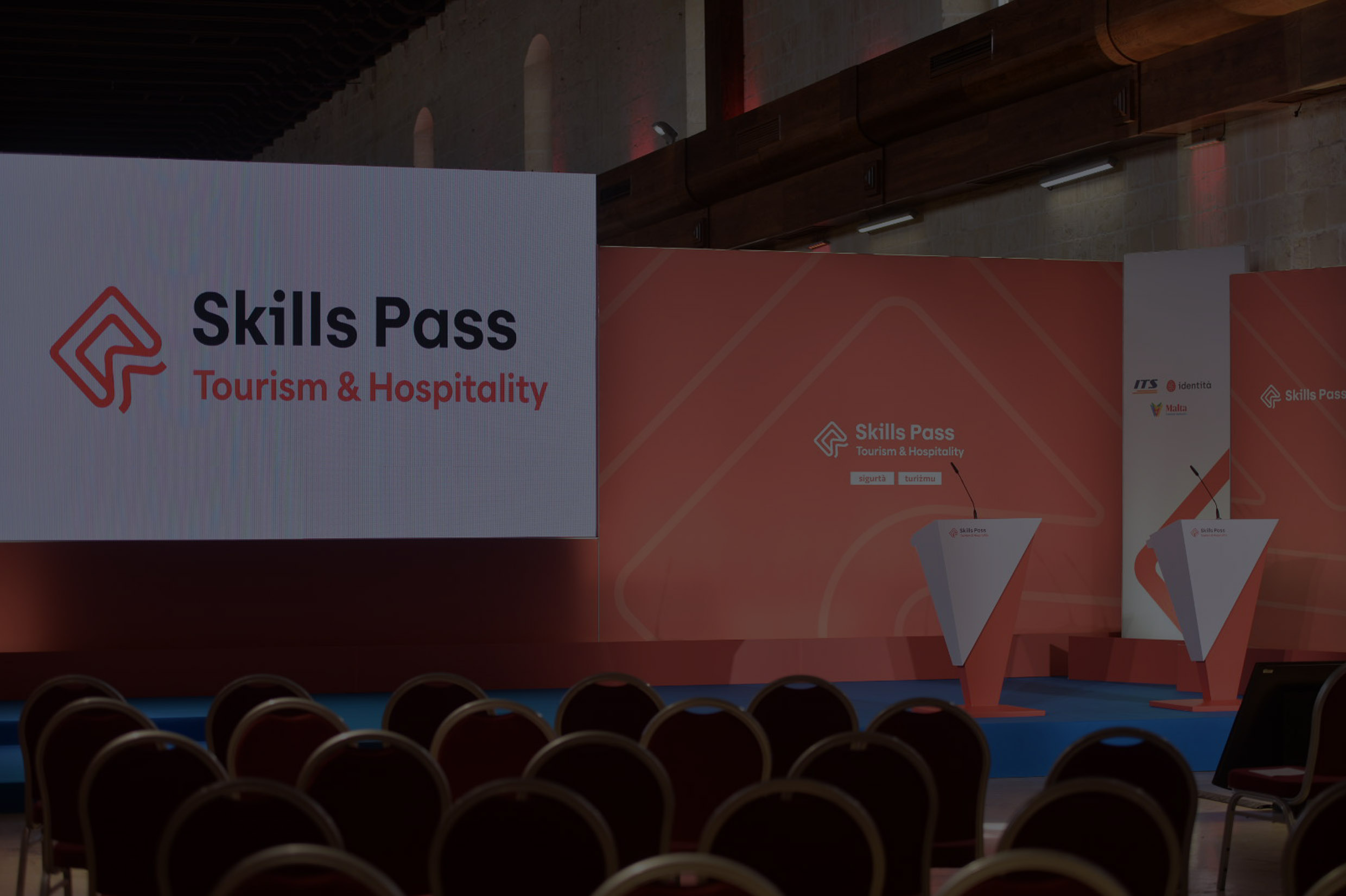
Skills Pass & Pre-Departure: Raising Standards, Not Barriers

Beyond the Bugibba Postcard
August 3, 2026
A Passion for the Finer Things
August 4, 2026Malta’s Institute of Tourism Studies has transformed the Skills Pass and new Pre-Departure framework into a system designed to raise workforce standards, improve integration and better prepare foreign workers for employment in Malta’s tourism and hospitality sectors, while supporting long-term sustainable growth
Few topics within Malta's hospitality industry have sparked as much discussion over the past two years as the Skills Pass. For some, it came across as yet another bureaucratic hurdle for third-country nationals looking to work in Malta. The reality however is that Malta's tourism industry could not continue growing sustainably without putting in place minimum quality standards, proper workforce preparation, and structured integration measures.
A lot of the conversation around Skills Pass focused on the process itself rather than the purpose behind it. Regulation tends to get an automatic bad reputation, while the actual benefits for employers, workers, and Malta's tourism standards often get overlooked.
Much of the day-to-day work carried out by the Skills Pass Unit within the Institute of Tourism Studies, along with the preparation, monitoring, and quality assurance happening behind the scenes, rarely gets the visibility it deserves.
The Skills Pass was designed to recognise and raise workforce quality within tourism and hospitality, while also preparing candidates before they enter the Maltese labour market. The process is educational through online courses and information provided to candidates, and verification-based, but importantly it was never designed to fail people.
Candidates are given fair opportunities throughout, including free resits where applicable, to successfully obtain their Skills Pass. And this is just the beginning. Skills Pass is designed to grow with the worker, with higher levels pegged to the Malta Qualifications Framework already being developed so that candidates can continue advancing their skills and professional recognition beyond the initial certificate.
Another important aspect worth highlighting is what Skills Pass offers employers specifically. Unlike a CV, which is a document drafted by the candidate themselves and largely taken at face value, a Skills Pass certificate is based on actual performance and verified competency.
Employers can therefore have greater confidence in what they are getting, because the results reflect real ability rather than self-reported experience.
Why ITS Was Chosen
The Institute of Tourism Studies is Malta's national educational institution for tourism and hospitality, which made it the natural fit to implement the Skills Pass framework back in 2024. ITS already had the industry expertise, training infrastructure, and experience in skills validation needed to get this right. It invested heavily in a custom-built online portal through which candidates could register, complete online courses, book interviews, and attend verification interviews from different cities and countries around the world.
One of the strongest features introduced from the start was online examination proctoring. Candidates are monitored through random snapshots during online assessments, and the system automatically flags situations where examination regulations may have been breached such as covering the camera or receiving external assistance. Action is then taken where necessary in line with quality assurance procedures and GDPR regulations.
By 2025, over 22,000 Skills Pass completion certificates had already been issued, with 44% granted to candidates already working within hospitality and tourism. Pass rate analysis also showed a gradual improvement in candidate preparation over time, telling us that workers are becoming more aware of what is expected before sitting for their assessment. For many candidates this is also their first time working abroad and preparation genuinely matters.
From Skills Pass to Pre-Departure
The success of the Skills Pass framework demonstrated that ITS had built the operational infrastructure needed to manage large candidate volumes, conduct assessments both online and in person across the world, train assessors, and maintain consistent standards throughout. Importantly, ITS never approached Skills Pass simply as an examination process.
The focus was always on workforce preparation and integration, making sure workers understood what life and work in Malta actually involves, improving communication standards, supporting integration, and protecting the quality of Malta's tourism product.
It therefore became increasingly clear that this operational model could be expanded beyond hospitality into a wider pre-departure preparation framework, as outlined within the Malta Labour Migration Policy. The Pre-Departure framework officially launched on 5th January 2026 and includes two online courses covering living and integrating in Malta as well as rights and obligations at the workplace. Candidates must also successfully complete an English Proficiency Test before proceeding to a face-to-face interview held with a locally trained assessor at a verification centre of their choice.
The New Portal and Operational Improvements Alongside the expanded framework, ITS introduced a new and improved portal focused on scalability, efficiency, and better candidate support. The portal brought with it a more user-friendly experience with clearer navigation and smoother processes for both candidates and employers.
Occupation mapping through ISCO codes created a more organised system capable of synchronising more effectively with governmental entities. Assessment integrity was further strengthened through continuously updated question banks with increased randomisation. A 24/7 AI chatbot was introduced alongside deeper Zendesk integration, giving candidates and employers clearer and more accessible support.
Candidate progress, interview statuses, payments, appeals, and certification stages can now all be managed through one centralised system, making it easier to handle larger volumes and resolve issues faster.
The First Months of the Expanded Framework
The early results following the January 2026 launch were encouraging. Within the first few months, over 9,000 candidates registered on the new portal and operations were successfully managed across approximately 75 centres worldwide. New centres were introduced in countries including Brazil, Colombia, and Bangladesh.
Over 20% of registered candidates selected tourism as their chosen sector, more than 2,000 certificates were issued, and around 30% of these went to candidates entering hospitality and tourism. These numbers show that the framework is scalable well beyond hospitality alone and that pre-departure preparation can successfully operate on a large international scale.
Looking Ahead
Throughout this journey, one thing has remained constant which is the importance of listening. ITS actively engages with industry stakeholders, social partners, and employers on an ongoing basis to make sure the framework continues to reflect operational realities and to identify where improvements can be made. This is not a system that was built once and left alone. Better evaluation tools, stronger stakeholder contact, and more opportunities for feedback are all part of how we intend to keep improving.
The next steps also include expanding into new sectors. Construction is already being looked at as part of our plans to grow the framework beyond hospitality, creating new opportunities for workers and employers alike while continuing to raise standards across Malta's labour market. As more sectors come on board, the foundations we have built as a country put us in a strong position to take that next step and remain relevant both for industry and for labour migration in Malta.
The Pre-Departure Course and the continued development of Skills Pass were never meant to create obstacles. The purpose is to ensure that workers arriving in Malta are better prepared, informed, and supported before entering the workforce.
No system is ever perfect and continuous improvement is always part of the process, which is why feedback is always welcome.
Anyone wishing to learn more or share suggestions is welcome to reach out to the team on +356 2379 3300, on email predeparture@skillspass.org.mt or visit us at skillspass.org.mt

Established in 1987, the Institute of Tourism Studies (ITS) is Malta's main educational institution for hospitality and tourism. Offering a wide range of study programmes from Foundation to Master's Degree level, ITS provides students with both theoretical and practical education in specialised labs and kitchens.
As an affiliated partner with top international universities, including the Emirates Academy of Hospitality Management, ITS offers a comprehensive learning experience. In addition to academic studies, ITS provides opportunities for students to pursue further training and specialisations, equipping them with a competitive edge in the industry.
For more information visit https://its.edu.mt/
Click here to see Horeca Issue 24 online