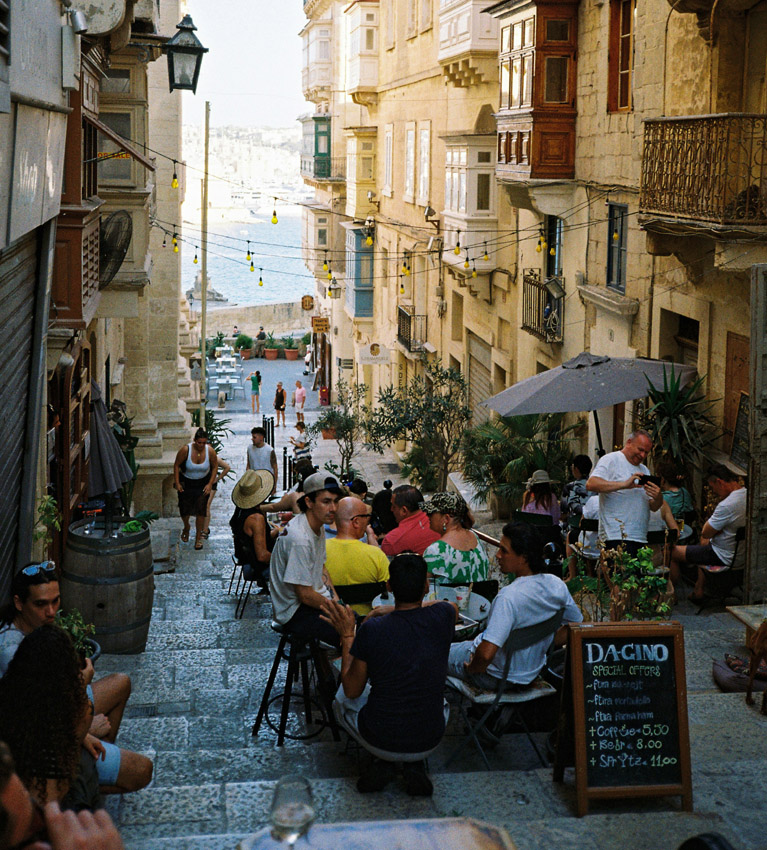
Towards A More Circular HORECA Sector

Wine’s Quiet Crisis: Why Consumption is Falling.
October 17, 2026Today’s customers are looking beyond the meal, the room,
the coffee, or the service itself.
More than ever, they want
to know where products come from, how resources are
used, how waste is managed, and whether businesses are
genuinely trying to operate in a more responsible way.
This matters especially in the HoReCa sector, where hotels, restaurants, and catering businesses use large amounts of food, water, energy, packaging, textiles, and other everyday supplies.
In this context, circularity is no longer just about small eco-friendly actions. It is becoming a smart way to run a business more efficiently, reduce waste, and build stronger trust with customers.
An eco-conscious customer is, in simple terms, a more aware and environmentally responsible customer. They are more likely to choose and return to businesses that reflect their values. Price, comfort, convenience, and quality still matter, but these customers also notice things like waste reduction, reuse, refill options, recycling, local sourcing, and more efficient use of resources.
They think about the wider journey of a product or service, from how it is sourced and delivered to how it is used, reused, or thrown away. For HORECA businesses, this means sustainability is no longer just a background issue. It can directly shape how customers see a business.
Hospitality has always been about the customer experience. Good service, comfort, and convenience remain essential. But customer expectations are changing. Simple measures such as refill stations, reusable packaging, locally sourced ingredients, less food waste, and fewer single-use items can make a real difference. These actions are visible, easy for customers to understand, and show that sustainability is part of the experience rather than an afterthought.
They also help HORECA businesses appeal to a growing group of customers who actively look for more responsible choices. However, circularity is not only about what customers see. A lot also happens behind the scenes, from purchasing decisions and stock control to portion planning, kitchen waste checks, laundry management, maintenance, supplier choices, and staff routines.
These daily decisions can reduce waste, improve efficiency, and help businesses save money over time. This is why regular internal checks are important. They may not always be exciting, and they can feel like extra paperwork, but they help make sure that good practices are followed consistently. By monitoring areas such as food waste, refill systems, linen reuse, stock rotation, supplier choices, and waste separation, businesses can spot problems early and keep improving.
The benefits are not only environmental. They can also make good business sense. Hotels can cut costs by replacing single-use toiletries with refillable dispensers, encouraging towel and linen reuse, and setting sensible air-conditioning limits that keep guests comfortable.
Restaurants and caterers can reduce food waste through better planning, improved stock rotation, and by allowing customers to take home uneaten food when appropriate. Where it is safe and suitable, surplus food may also be donated as part of a wider social responsibility effort. Local sourcing can reduce transport impacts while offering a more authentic farm-to-table experience, something many visitors increasingly look for when they want to experience a place like a local.
Ultimately, moving towards circular practices is not about adding unnecessary complexity, nor is it the responsibility of one sector or business owner alone. It is about adopting better everyday choices that help reduce waste, use resources more efficiently, and encourage a stronger sense of shared responsibility.
When these measures are introduced, they can support lower costs, stronger credibility, greater staff awareness, and better alignment with changing expectations. More importantly, they show that responsible practices are not only beneficial for businesses, but also valuable for customers, communities, and the wider transition towards a more circular economy.
The examples presented in this article show that some local HORECA businesses are already taking practical steps towards circularity. Others can build on these ideas by introducing realistic changes that suit their own operations. This direction also aligns with Vision 2050, particularly Macro Measure 77; ‘Steer Malta towards a circular economy by strengthening reuse, repair and material recovery systems for recycling, supported by sustainable separation practices’, it also supports Malta’s Sustainable Development Strategy for 2050, especially Strategic Goal 1; ‘Transitioning Towards a Climate-Neutral Green and Blue Economy’, which highlights the importance of circular consumption. The HORECA sector has an important role to play in this transition.
By acting early, businesses can respond to changing customer expectations, adapt with greater confidence, and place themselves in a stronger position for the future.
The Circular Economy Malta (CEMalta) is the designated competent entity, set up by Government, for the Circular Economy under the Environment Protection Act. The Government of Malta is committed to reduce the volume of waste currently being disposed of at existent landfills, both for environmental and spatial reasons. In view of this, circular economic activities can play a crucial role in the effective reduction of disposal of waste in landfills.
For more information visit https://www.cemalta.gov.mt
Click here to see Horeca Issue 25 online