
Building Hospitality Beyond Borders

Elevating Malta’s Tourism
June 5, 2026
Showcasing Malta to the World
June 26, 2026
In this exclusive interview, hospitality entrepreneur Winston Zahra reflects on his international success, advocates for a more sustainable and quality-driven future for Malta’s tourism industry and shares the leadership values that have shaped his people-first approach to hospitality.
Words by Stephen Gauci.
Few names carry as much weight in Malta’s hospitality landscape as Winston Zahra. With a career spanning decades and countries, Zahra has moved from the islands that shaped him to the international stage, founding TROO Hospitality, a white-label management company now operating some of the UK’s most distinctive hotel assets.
From Manchester’s historic Stock Exchange Hotel to the celebrated Hotel Football brand, and The Reserve, an immersive safari-style luxury lodge at Chester Zoo, his portfolio reflects a vision that is both commercially demanding and genuinely human. We sat down with Zahra to discuss the forces shaping global hospitality, the hard truths facing Malta as a destination, and the lessons that have guided him throughout a remarkable career.
From the Islands to International Growth
Zahra’s entry into hospitality was shaped by an early and instinctive understanding of the industry. “Hospitality is one of the few industries where you combine people, creativity, finance, operations, design, and emotion all in one business,” he reflects. “Very early on, with the support and direction of my father, I realised that hotels are not simply buildings with bedrooms. They are living businesses that shape how people experience a city or country.” That insight became the foundation of everything that followed, including his decision, years later, to take his ambitions international.
The creation of TROO Hospitality was a deliberate response to a gap he identified in the post-COVID market. “There was disillusionment with the delivery of some of the big brands who were managing properties from somewhat of a distance and a desire from these brands to move away from day to day property management and focus on their marketing and distribution strengths, ” he explains. “Many owners wanted recognised quality management expertise, but they also wanted flexibility, speed of decision making, and a partner mentality rather than a rigid corporate structure. This without losing the global distribution strength of the big brands.” TROO was built to deliver precisely that; entrepreneurial, agile, and genuinely aligned with owners in a way that larger operators rarely are.
Experience Over Accommodation
The projects TROO pursues tell a clear story about where Zahra believes hospitality is heading. Projects like Hotel Football, with a second location set to open in Newcastle in 2028, are exciting to him not just commercially but because “they create emotional engagement beyond the hotel itself.” The Reserve at Chester Zoo and the Stock Exchange Hotel in Manchester similarly demonstrate his interest in hospitality that connects to something larger: placemaking, regeneration, and community.
The trends driving these choices are well-mapped in his mind. Guests increasingly expect experiences, not rooms. Lifestyle positioning consistently outperforms generic offerings. Sustainability is no longer a value-add but an operational imperative. And AI, he believes, is set to reshape the industry faster than most realise. “To some extent we are seeing the disrupters of 15 years ago, the Online Travel Agencies (OTAs), now being disrupted themselves by AI being used to source and book travel,” he says. “We think this will be a fast developing and game-changing trend.”
Yet despite these technological advances, Zahra remains convinced that hospitality’s human core will remain unchanged. “I do not believe technology will replace hospitality’s human core, and I pray that it does not. That is the essence of what hospitality is all about.” Instead, he believes technology should free hospitality professionals from repetitive administrative tasks, allowing them to focus on what matters most.
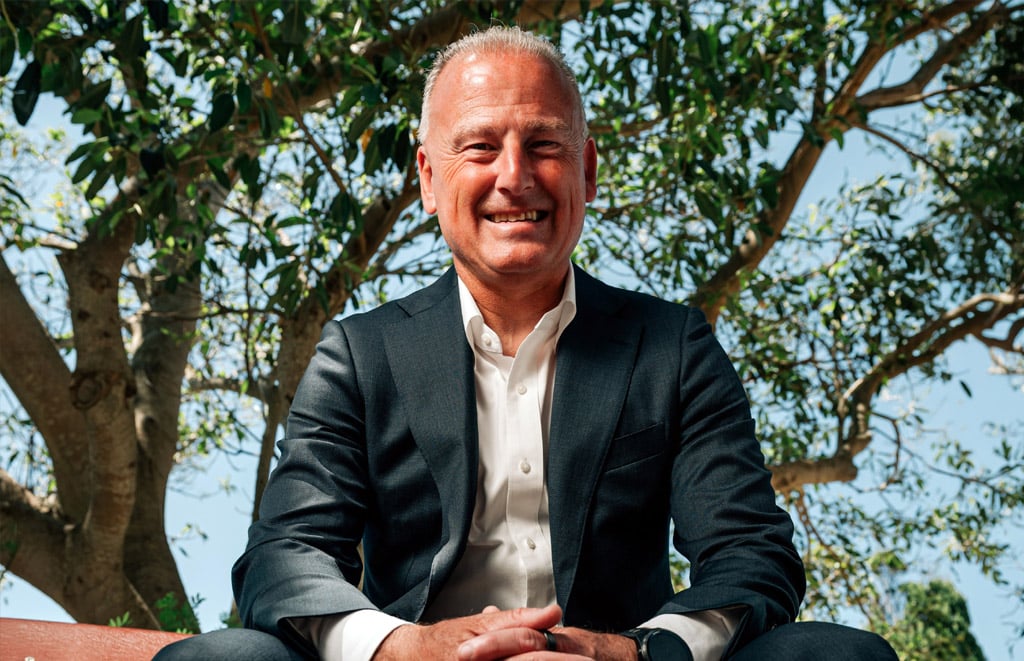
Winston Zahra
Malta at a Crossroads
When the conversation turns to Malta, Zahra’s tone shifts, becoming both proud and candid. He acknowledges the remarkable progress of the past two decades: improved connectivity, growing international awareness, and a substantially better hospitality product. He even recalls when 20 years ago he was “branded part of the low cost at all cost brigade” when together with others he lobbied for the introduction of low-cost airlines, a move he credits as a key catalyst for Malta’s exponential growth in visitor numbers.
But that success, he argues, has come with risks that are no longer hypothetical. “Success also creates pressure, and we have to be careful not to become a victim of our own success,” he warns. Parameters that had at the time been recommended to cap individual airline capacity and manage passenger volumes in his view, were ignored or allowed to lapse. The result is a destination under strain. One that has “gone down the line of volume and numbers for too long.”
The deeper concern is identity. “International travellers increasingly seek authenticity, culture, character, and emotional connection. Overdevelopment or short-term thinking is eroding exactly what makes Malta unique.” He is equally forthright about the workforce dimension: “I am old enough to remember the days when all our team members were Maltese and delivered a great authentic experience to visitors. Today we all know that is not the case, so a massive effort needs to be made to regain this with the current available workforce.”
If asked to redesign Malta’s hospitality strategy from scratch, his priorities are clear: a stronger focus on quality over quantity, “through action, not words”. Better urban planning, a long-term infrastructure plan, a world-class talent development ecosystem, and seasonality strategies built around culture, wellness, gastronomy, and sport. He is particularly pointed about the festival culture: “Concurrently downplaying the constant promotion of large summer festivals and events that simply attract a different market to the one we aspire to have on the island.”
Leadership, Culture, and the Next Generation
Throughout a career certain leadership principles have remained constant. People first. Transparency always. Relentless adaptability. And a genuine belief in empowerment over hierarchy. “My biggest satisfaction over the years has always been to watch individuals develop and grow, even when they outgrow the company and move on,” he says. “Today I look back and see many people who used to work for our company in Malta heading up significantly sized companies or who have set up their own organisations and thrived. It’s great to see.”
TROO Hospitality has recently been shortlisted among the top six employers in the UK hospitality industry - an endorsement, Zahra says, of the people-led culture the team has worked hard to build.
On the younger generation entering the industry, he was pragmatic saying, “The younger generation values flexibility, purpose, personal growth, and work-life balance far more than previous generations did. In many ways, it is pushing the industry to evolve positively.”
The challenge, he acknowledges, is maintaining operational discipline while meeting those new expectations. “In many ways, it is pushing hospitality to evolve positively.”
For young Maltese professionals aspiring to leadership roles, his advice is straightforward: remain curious, gain broad experience, travel internationally and embrace continuous learning. “The best hospitality leaders are lifelong learners.”
A Legacy Still Being Written
For all his international reach, Zahra’s connection to Malta remains unequivocal. He is, at heart, an advocate for the islands. Someone who believes deeply in their potential and is concerned, precisely because of that belief, by what he sees as avoidable missteps.
“Malta has enormous advantages: its history, people, climate, safety, accessibility, culture, and genuine hospitality DNA,” he says. “The opportunity remains huge if managed correctly. But the risk of a downturn is also huge if we get it wrong.”
When the conversation turns to Malta, Zahra’s tone shifts, becoming both proud and candid. He acknowledges the remarkable progress of the past two decades: improved connectivity, growing international awareness, and a substantially better hospitality product. He even recalls when 20 years ago he was “branded part of the low cost at all cost brigade” when together with others he lobbied for the introduction of low-cost airlines, a move he credits as a key catalyst for Malta’s exponential growth in visitor numbers.
But that success, he argues, has come with risks that are no longer hypothetical. “Success also creates pressure, and we have to be careful not to become a victim of our own success,” he warns. Parameters that had at the time been recommended to cap individual airline capacity and manage passenger volumes in his view, were ignored or allowed to lapse. The result is a destination under strain. One that has “gone down the line of volume and numbers for too long.”
The deeper concern is identity. “International travellers increasingly seek authenticity, culture, character, and emotional connection. Overdevelopment or short-term thinking is eroding exactly what makes Malta unique.” He is equally forthright about the workforce dimension: “I am old enough to remember the days when all our team members were Maltese and delivered a great authentic experience to visitors. Today we all know that is not the case, so a massive effort needs to be made to regain this with the current available workforce.”
If asked to redesign Malta’s hospitality strategy from scratch, his priorities are clear: a stronger focus on quality over quantity, “through action, not words”. Better urban planning, a long-term infrastructure plan, a world-class talent development ecosystem, and seasonality strategies built around culture, wellness, gastronomy, and sport. He is particularly pointed about the festival culture: “Concurrently downplaying the constant promotion of large summer festivals and events that simply attract a different market to the one we aspire to have on the island.”
Leadership, Culture, and the Next Generation
Throughout a career certain leadership principles have remained constant. People first. Transparency always. Relentless adaptability. And a genuine belief in empowerment over hierarchy. “My biggest satisfaction over the years has always been to watch individuals develop and grow, even when they outgrow the company and move on,” he says. “Today I look back and see many people who used to work for our company in Malta heading up significantly sized companies or who have set up their own organisations and thrived. It’s great to see.”
TROO Hospitality has recently been shortlisted among the top six employers in the UK hospitality industry - an endorsement, Zahra says, of the people-led culture the team has worked hard to build.
On the younger generation entering the industry, he was pragmatic saying, “The younger generation values flexibility, purpose, personal growth, and work-life balance far more than previous generations did. In many ways, it is pushing the industry to evolve positively.”
The challenge, he acknowledges, is maintaining operational discipline while meeting those new expectations. “In many ways, it is pushing hospitality to evolve positively.”
For young Maltese professionals aspiring to leadership roles, his advice is straightforward: remain curious, gain broad experience, travel internationally and embrace continuous learning. “The best hospitality leaders are lifelong learners.”
A Legacy Still Being Written
For all his international reach, Zahra’s connection to Malta remains unequivocal. He is, at heart, an advocate for the islands. Someone who believes deeply in their potential and is concerned, precisely because of that belief, by what he sees as avoidable missteps.
“Malta has enormous advantages: its history, people, climate, safety, accessibility, culture, and genuine hospitality DNA,” he says. “The opportunity remains huge if managed correctly. But the risk of a downturn is also huge if we get it wrong.”