
Maintaining Quality Under Pressure

A Gigantic Wakeup Call
April 27, 2026
The Business of Free Cancellation in Hotel Bookings
May 3, 2026Denis Jin Young L muses on how to do this without losing your mind, your team, or table 12.
Busy is fine. Chaos is expensive. When the printer won’t stop, the pass looks like Regional Road on a rainy Monday morning, and someone’s called in sick, quality doesn’t ‘disappear’. It gets revealed - either you have a plan, or you have vibes.
But vibes don’t plate food, calm guests, or stop a dining room from turning into a slow-motion car crash. Here’s the plan: simple, repeatable, and designed for real service - where the order checks don’t care about your feelings.
1. Covers vs spend per head: stop chasing ‘full’ as the ultimate goal
A full room looks good on Instagram. But if service slips, the room stops being ‘full’ and starts being expensive - and not just for the guest. Is more people always better? Only if you can serve them properly. When service quality drops, you lose money in quiet ways that don’t show up immediately:
• second drinks don’t happen because no one is available
• upsells die because the team is rushing and reactive
• timing breaks, so tables don’t trust your flow
• reviews turn into ‘food was good but…’ (the most dangerous sentence)
• repeats vanish, and you never get told why
So don’t ask, ‘How many can we fit?’ Ask: What’s our max quality capacity tonight? Short one runner? New chef on the hot section? Steward section behind? Kitchen already calling for space? Then limit numbers and protect spend per head plus reputation. Because Malta is small. Bad nights travel fast. You don’t just lose one table - you lose the story they tell. A controlled room is not ‘less busy.’ It’s professionally busy.
2. Kitchen + front: if you’re not synced, guests pay for it
The guest should never be the messenger between sections. Under pressure, kitchen and front must operate like one unit - not two teams arguing through the pass. Non-negotiables:
• real timing only. If it’s 25 minutes, don’t say 10. Don’t gamble with someone else’s patience
• front controls pacing. Seating and service flow are your pressure valves. You don’t ‘fill the room’. You orchestrate the room
• one point of contact at the pass. Clear calls, one voice, no shouting matches. Chaos at the pass becomes chaos on the floor.
If the kitchen is drowning and the floor keeps seating as if nothing’s happening, you’re basically pouring petrol on a burning pot. A good service is not ‘fast’. It’s coordinated.
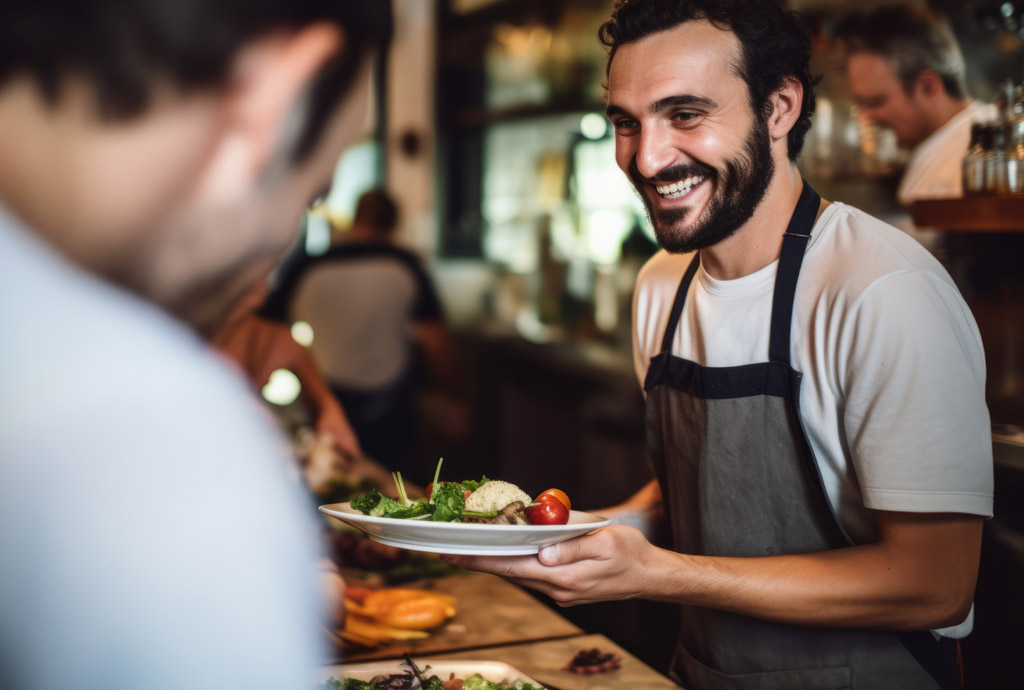
3 One leader per section. That’s it
Under pressure, group discussion becomes group panic. Ten opinions in a crisis are not teamwork - it’s static. Each section needs one leader: the kitchen lead and the floor lead. Everyone else follows. Not because anyone is a dictator, but because clarity is kindness during pressure. Fast decisions beat perfect debates every time.
This is what leadership looks like in service:
• someone sets the rhythm
• someone filters problems
• someone makes calls so the rest of the team can execute
A team without a clear lead doesn’t feel free. It feels sketchy.
4. Even if the leader is wrong, follow - then debrief later
Here’s the hard truth: during service, confrontation is poison. If the team argues mid-service, guests feel it instantly. Not maybe. Instantly. Rule: During heat: follow the leader’s call, keep the room stable.
After service: review, fix, improve.
You might win the argument and still lose the table. And you can’t comp your way out of a vibe that says the place is falling apart. A great team protects the guest experience first, then handles the ego later. Post-service is where the truth happens:
• what caused the bottleneck
• what communication broke
• what system failed
• what you need tomorrow so tonight doesn’t repeat
Mid-service is not the time to be right. It’s the time to be useful.
5. Tell the guest the truth - early - and ‘patch up’ with emotional intelligence
Guests forgive delays. They don’t forgive confusion, silence, or feeling ignored. When you hide the truth, you create a worse version of the truth in their head. And it’s always dramatic,
“They forgot us.”
“They don’t care.”
“They’re disorganised.”
“They took our order and disappeared.”
So say it early, calmly, like a professional:
On arrival, “Just to let you know, we’re short-staffed tonight, so service might be a tad slower than usual.”
“The kitchen is handling a rush - I’d rather be honest on timing so you can relax.”
Then you ‘patch up’ with small, smart moves that cost almost nothing but feel like care:
• check-ins before they wave you down
• water and bread refills without being asked
• clear updates: “five to 10 more minutes” beats silence every time
• options: “If you’re in a hurry, I can suggest something quicker.”
That’s emotional intelligence: don’t let them feel forgotten. Most guests aren’t timing your kitchen - they’re timing your attention. Busy is not impressive. Controlled is. And quality doesn’t need perfect conditions - it needs standards that don’t collapse when it gets loud.
So next time the tickets stack and the room starts to tilt, remember: either you run the service, or the service runs you. Choose control. Or pay now - pray later.

Denis Jin Young L.
Denis Jin Young L., a seasoned consultant in the hospitality sector with over three decades of experience, has called Malta his home for over eight years. Presently, he is the Director of Hospitality at the Xara Collection, which includes a variety of establishments such as the Villa Barumbara tal-Laring, the Xara Palace Hotel, Relais & Châteaux, Xara Catering, the Xara Lodge, Oka’s at the Villa, Medina restaurant, Trattoria 1530 AD, the de Mondion restaurant, Rosami at the Villa and the Xara Gardens.
Click here to see Horeca Issue 23 online