A Gigantic Wakeup Call

AFS LTD – Seventy Years of Expertise, Innovation and a Future Driven by Water
April 26, 2026
Maintaining Quality Under Pressure
April 29, 2026Victor Calleja believes the recent incident at Ġgantija calls for stricter protection and visitor capping at what’s one of our most important heritage sites.
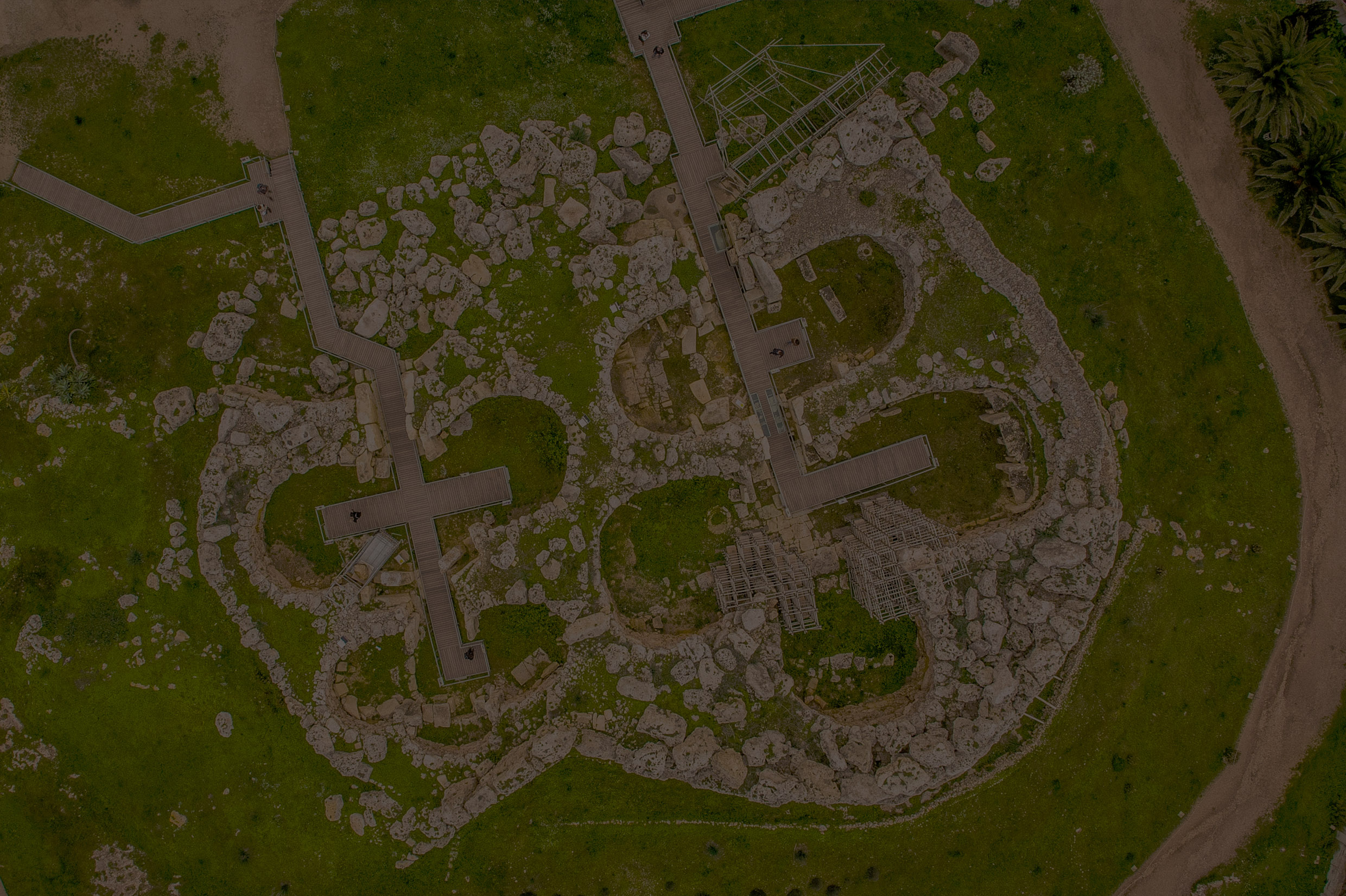
Recently, a visitor to Ġgantija, one of our most important heritage sites, felt the urge to leave his mark on the temple by inscribing his name on it. Bravo! He was caught; he apologised, defended his deed by claiming he didn’t know it wasn’t allowed, got rapped by the magistrate, fined, and given a suspended jail sentence.
End of story.
Shouldn’t this incident – which is hardly isolated – set alarm bells ringing and trigger us to discuss the much bigger picture? It’s not merely that the site, sacred to our ancestors but also sacred in the sense of being precious, priceless, and peerless, needs protection.
It needs that protection – and how. Beyond the idiocy of the man who dared deface one of our national and worldwide treasures, there is also the idiocy of all of us, who should know better and take better care of these gems. Not just for us and all visitors, but for future generations.
Ġgantija has withstood the ravages of man, weather, and natural erosion, and still stands as one of the oldest free-standing structures, dating back over 5,000 years.
Does this mean that we should stop all visitors to the temples? Definitely not. Yet shouldn’t we rethink our marketing approach? The narrative we have always used has been deemed a success story; the numbers bear this out. In recent years over 200,000 people visited Ġgantija in a single year. This is an impressive number. But numbers often hide a few realities. The quicker we analyse those numbers and their effect on our heritage sites, the better. As a nation, we have been very successful in attracting huge numbers to our shores. Several of these masses visit our historic heritage sites.
However, how many really care, really appreciate, really understand the significance of the sites they visit? How many are just happy to click themselves into a selfie with a ruin in the background? Maybe few are ready with a scalpel or penknife, eager to chisel their name, their partner’s name, or a heart onto the walls of our treasures. But many, if not the majority, go to Ġgantija as part of their holiday boxes to be ticked. Most probably, to many it’s just a bit of historic rubble – cute and picturesque.
Our tourism success is – or has been for quite some time – based on numbers. The number of tourists we attract, the annual percentage-point increase, the number of people frequenting restaurants, the number of visitors to our heritage sites. We have considered this a salutary way to promote our tourism and especially our economy. Without the numbers, without the revenue they generate, the country would be poorer and the heritage sites would not generate funds to be preserved. This is, and will be, the eternal dilemma of tourism, and particularly of over-tourism.
But numbers can be our own destruction. If we are attracting the wrong visitor profile to unique sites like Ġgantija, shouldn’t that be revisited?
Shouldn’t we restrict the number of people who visit Ġgantija? If a comparison is made with the Hypogeum’s numbers, Ġgantija comes out way on top. It is a true giant in numbers: close to quarter of a million visit Ġgantija, while under 30,000 visit Hypogeum. The Hypogeum’s way sounds like the best approach: less visits but more curated; less visits but timed, strictly supervised. More education of what the temples are, what they represent, how they were built, and for what reason.
The Hypogeum does not have a graffiti problem, and it has what sounds like a good high-value attraction which Ġgantija lacks. Ġgantija can be converted into a more attractive, more refined sanctuary. We can – we should, because we owe it to our ancestors – relate a story which is more far-reaching than what we have done so far. About Ġgantija, about the temples, about the people who built and dwelt around those sacred grounds.
We should do away with the myth that these were built by giants. They were human like us, loved their land, and tilled that land – the land that gave them the stones that were erected into the wondrous temples.
If we tell their story, and all our stories, in a better way, maybe no idiot will come forward to leave his mark. We owe it to our forefathers to look after what they built, what they passed on to us, so that we may pass it on to future generations.
The idea of telling a better story about Ġgantija can be used for the rest of our country – from our food to our architecture to our traditions. We do not and should not just dump it out there to attract the masses. Numbers have given us life; let us not allow our own success, the numbers that bring us revenue, to kill our essence and become our failure.
Victor Calleja
Victor Calleja is a writer and columnist for Malta’s leading newspaper. For a number of years he edited Insider, a gastronomy and hospitality magazine. He also edited Archetype, centred around urban living. Victor loves anything connected to words, food, travel, and storytelling.
vc@victorcalleja.com
Click here to see Horeca Issue 23 online