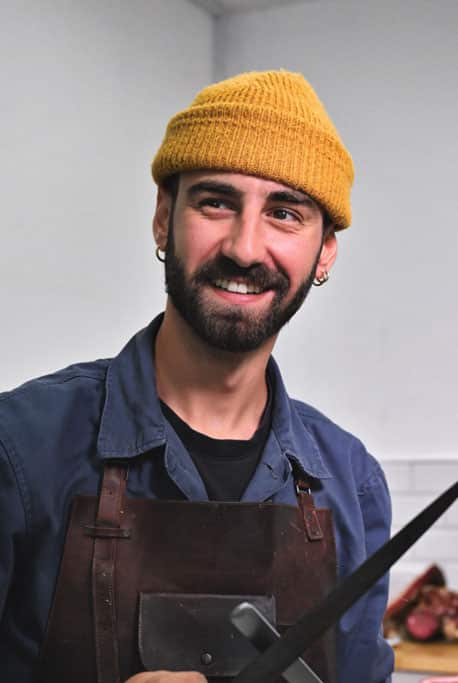
Q: What inspired your move from chef to artisanal charcutier in Gozo? A: I have always been passionate about whole-animal butchery, even while working as a chef across Europe. Charcuterie was the part of the craft that truly resonated with me, the patience, the technique, and the nose-to-tail philosophy behind it. As I developed my skills, I noticed a gap locally for true artisanal curing. Founding Nelli’s Carkuterija felt like a natural step to bring that vision to life in Gozo.
Q: Nelli’s products celebrate local ingredients, from locally raised meat to herbs you grow yourself and sea salt from Xwejni Salt Pans. How important is this focus on terroir and sustainability for the Horeca market today? A: There’s been a clear shift towards sustainability, transparency, and real craftsmanship. For us, it’s about identity and responsibility, knowing exactly where everything comes from and respecting the environment that produces it. That connection to place gives depth and integrity to the final product. In today’s HORECA market, that authenticity isn’t just appreciated, it’s expected, and it ultimately defines quality.
Q: Which of your cured meats have chefs and hospitality professionals responded to most enthusiastically? A: Without a doubt, the pork head terrine stands out. It takes a cut that’s often ignored and turns it into one of the most flavourful expressions of the animal, which really captures our nose-to-tail approach. Our Coppa is also a favourite for its natural fat composition and balance. I think our charcuterie works best when chefs keep it simple, quality slicing, good bread, thoughtful pairings, and letting the product do the talking.
Q: With plans to open a dedicated shop in Rabat that includes a tasting table, how do you see direct consumer engagement and education around charcuterie evolving in Malta’s food scene? A: Our aim with the shop is to help bridge the gap between consumer and producer. A tasting table creates space for conversation, explaining the process, the sourcing, and the time behind each cure. By focusing on traceability and slow food principles, we can help consumers better understand what they’re eating and strengthen appreciation for craftsmanship within Malta’s evolving food culture.